
Manning Town
[Forgotten Places]

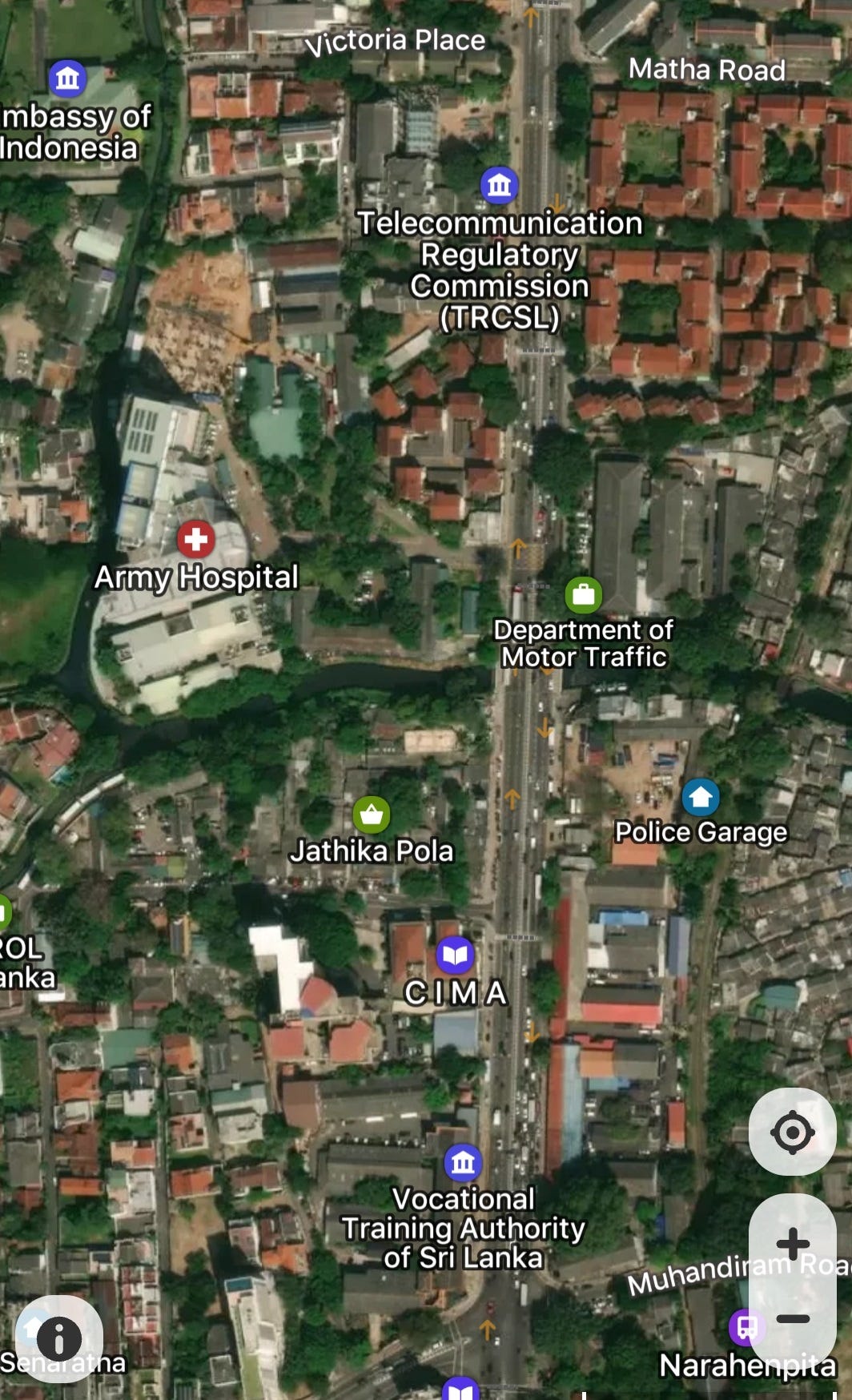
Manning Town, in old Colombo, was a short-lived but significant working-class housing settlement in colonial Ceylon (Sri Lanka), closely associated with early 20th-century urban reform in Colombo.
Colonial Colombo and Urban Reform (Early 1900s)
By the late 19th and early 20th centuries, Colombo had become overcrowded, mainly, due to, rapid urbanization, port, road, and railway expansion, and the massive migration of labor into the big city
Large sections of the native population lived in unsanitary slums, which alarmed British colonial authorities, particularly after outbreaks of plague and cholera.
Sir William Manning and the Birth of “Manning Town”
Sir William Henry Manning, who served as Governor of Ceylon (1918–1925), was a strong advocate of public health reform, planned housing for the urban poor, reducing disease through better living conditions. Under his administration, the colonial government initiated model housing schemes to relocate residents from inner-city slums.
One such scheme became known as Manning Town, named after the governor himself. The facility was a planned working-class housing estate built on the outskirts of central Colombo (by early 20th-century standards), designed with
proper drainage, ventilation, and sanitation, comprising a row of houses based on the concept of compact dwellings.
It was not a “town” in the modern sense, but rather a government housing settlement.
Manning Town became important for several reasons:
1. Early Public Housing Experiment
It was among the first state-led housing projects in Ceylon aimed at ordinary workers rather than elites.
2. Class and Control
While framed as welfare, such schemes also allowed colonial authorities to monitor populations, disperse politically active urban groups, and maintain order after World War I unrest
3. Nationalist Undercurrents
Ironically, many residents of places like Manning Town later became active in trade unions, supporters of anti-colonial and labor movements, and participants in early nationalist politics.
Decline and Absorption
Over time, the name “Manning Town” faded. The area was absorbed into expanding Colombo suburbs. Housing structures were modified, replaced, and renamed under later municipal plans. Today, the term survives mainly in old documents, municipal records, elder recollections, and colonial-era writings
Historical Legacy
Manning Town represents the beginning of state intervention in housing in Sri Lanka. It became an example of contradictions of colonial governance where welfare was intertwined with control. It laid the groundwork for later post-independence housing schemes such as, Municipal Council housing, State Engineering Corporation estates and Urban Development Authority (UDA) projects. In essence,
Manning Town was not just a place, it was a colonial experiment in managing people, health, and power in a rapidly changing Ceylon.
The Kelani Valley Railway had its stations at Baseline Road and Cotta Road, and a halt at Manning Town. There were stations at Orugodawatta and Kolonnawa on the Kolonnawa line. The Mutwal railway branched off at Orugodawatta through Mahawatta and Madampitiya towards the Colombo harbor and Mutwal.
Modern-Day Manning Town
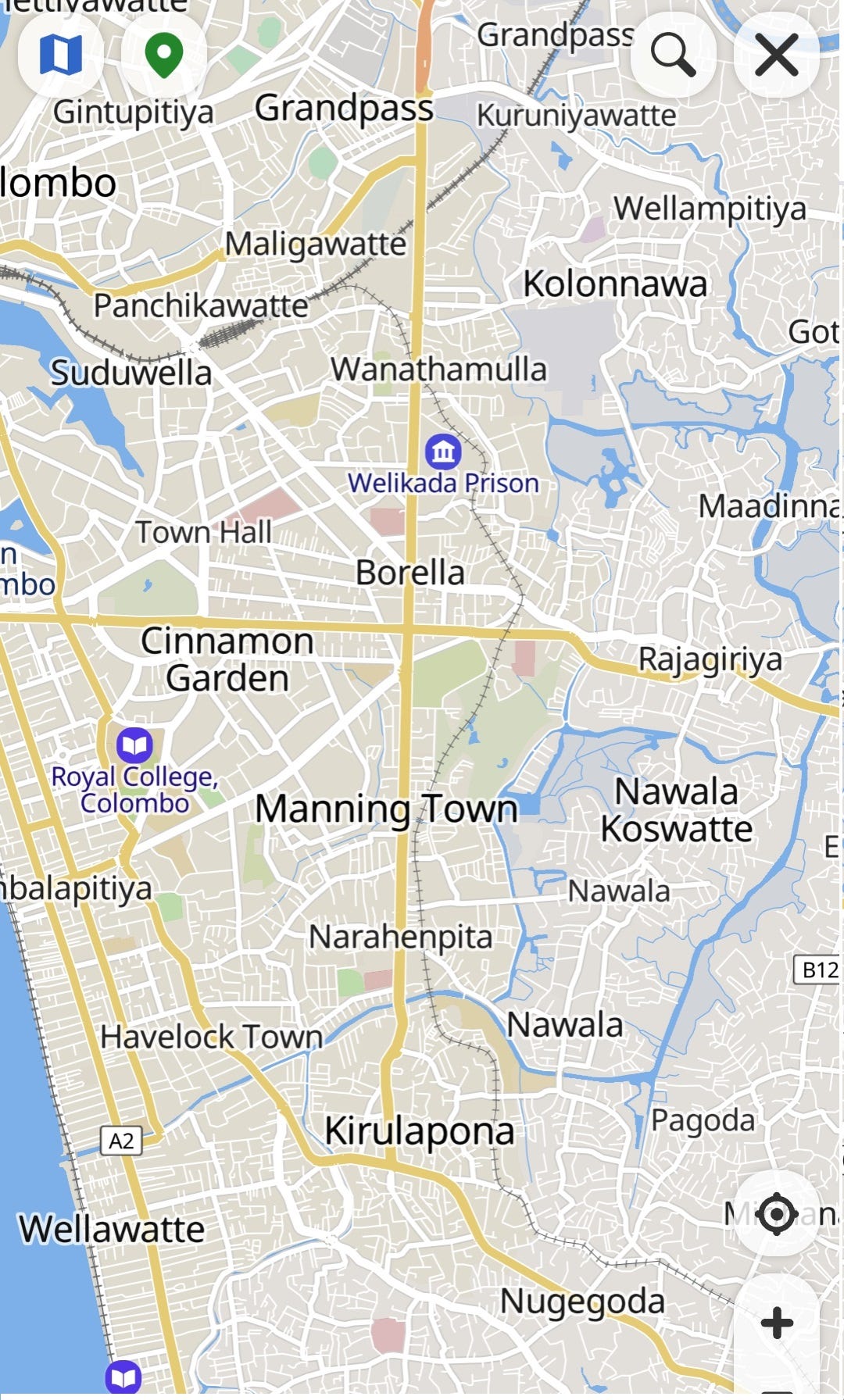
Manning Town, today, refers to a residential locality within the Thimbirigasyaya area of Colombo District, roughly in what is now the Colombo 5/Colombo 7 zone, between Borella, Narahenpita and Havelock Town.
Historically the site of a colonial–era housing scheme and community, many of the original single-storey homes have been replaced by multi-storey flats along Elvitigala Mawatha (formerly Narahenpita Road) near the Sri Lanka Standards Institution and Motor Traffic Department.
The locality is now a primarily residential and middle-class neighbourhood, with schools, shops, and local services close to major urban arteries linking central Colombo to suburbs and to the Royal Colombo Golf Club area.
The People who made Manning Town
By Dr Lakshman Abeyagunawardene
Sunday Times Aug 26 2007
I lived a good part of my childhood in Manning Town, a little township situated between Borella and Narahenpita in Colombo 8. My father who was attached to the Postal Department had been in the waiting list for government quarters in Colombo for some time. Towards the end of 1949, it was his turn to be allotted a ‘Government Bungalow” as they were then called. The family thus moved from Hendala where we were living in a rented house to Manning Town to start a new life in the city.
Rupees and Cents of Yesteryear
Much water has flowed under the bridges from the time when a gallon of petrol was sold at Rs 2.40, a pound of beef cost 80 cents and an ice cream cone was just 25 cents. Although I was only a mere eight years old at that time, I was aware that a Peacock cigarette was marketed at only 2 cents! That was also a time when a beggar happily accepted a one-cent coin with the all too familiar chant of “pin sidda vechchavey”.
50 years on : A section of Manning Town today with flats replacing the spacious bungalows of the past
Over half a century later, I am not too sure whether a beggar would be satisfied with a ten-rupee note! Our “new” home in Manning Town was a housing scheme where typical “middle class” families lived. Heads of households were attached to different government departments, but their income levels were more or less the same. The 54 families belonged to different ethnic groups - Sinhalese, Tamils, Burghers, Moors and Malays. On the basis of religion, it was a good mix of Buddhists, Christians, Hindus and Muslims. The upbringing in that environment went a long way in inculcating in us a sense of racial and religious tolerance and amity. Even today, in spite of sad events like the Black July of 1983, and the long drawn out North-East war, I have maintained close friendship with some of my childhood Tamil friends from the Manning Town days.
Strangely enough, the western sounding name “Manning Town” has survived the test of time. The names of the network of minor roads within the Scheme have also been retained to this day. Each house with four large bedrooms, wide verandahs etc., was in the centre of a 40 perch block
surrounded by a four-foot boundary wall. During those seven years, I must have traversed every inch of those roads whose names bring back to me, nostalgic memories of a happy childhood. 50 years later on my annual visits to Sri Lanka, I still make it a point to walk leisurely along Matha Road, Mangala Road, Mangala Path, Gajaba Road, Manning Square and Victoria Place.
Gone are the Bungalows
The aging “bungalows” were demolished nearly two decades ago. What has now come up in its place is a concrete jungle of “flats” providing housing to well over 200 families.
If one were to drive down Elvitigala Mawatha today from the direction of Borella towards Narahenpita, just beyond Kanatte and the Elvitigala Flats, the Manning Town Flats (that is the new name of the Housing Scheme) can be seen on either side of the main road. From Kitulwatte Road (road adjacent to Kanatte on the left) onwards, the entire stretch of land up to Koswatte Road belonged to Bogala Graphites and HL de Mel and Company in the fifties. The main Borella-Narahenpita Road which was then called Narahenpita Road, ran right across the government housing scheme with parts of it on either side. It was at that time, just a 20-foot road. Today, it is a six lane highway with two carriageways and has been renamed Elvitigala Mawatha (after the well known Ayurvedic physician who practiced in Narahenpita). As in “Old” Manning Town, the “New” Manning Town of today also has the large majority of housing units on the side of the Motor Traffic Department, and very few units on the opposite side where the Sri Lanka Standards Bureau is presently located.
The Manning Town Housing Scheme was roughly rectangular in shape and abutted the Ridgeway Golf Links (Royal Colombo Golf Club Course) on two sides. Across the golf course, one could see in the distance, the present Nawala Road, with the RCGC clubhouse and the Kanatte General Cemetery on the left. The narrow gauge Kelani Valley railway track also ran right across Manning Town. The small Manning Town Railway Station was right behind our house (G 31) that faced Mangala Path, the only section of the Scheme beyond the railway track. The KV line extended from Colombo Fort to Opanayake. In-between were railway stations Maradana, Dematagoda, Baseline Road, Cotta Road, Manning Town, Narahenpita, Kirillapone, Nawinna, Maharagama, Kottawa, Pannipitiya, Homagama and Avissawella. The railway line
bisected the Ridgeway golf course and ran close to the Kanatte cemetery.
The southern side of the rectangle was a marsh that was later filled up and on which site stands the present Department of Motor Traffic and the Police Garage. Beyond them was Mahawatte Road (present E.D. Dabare Mawatha). The fourth side of the rectangle faced a vast expanse of scrubland that we used to call the “African Jungle” where we played “Police and Robbers” or “Hora-Police”.
Beyond the fringes of the “African Jungle” (part of which is now the fashionable residential area of Longden Place) towards Bullers Road, was the Havelock golf course on which the BMICH was later built, and the CR & FC rugger grounds surrounded by those tall Cypress trees even then. It was in this section of Manning Town that was demarcated from the rest by Narahenpita Road, that the Manning Town Government Officers Club was situated at Victoria Place (the road leading to the present Sri Lanka Standards Bureau). The two tennis courts were adjacent to the main Narahenpita Road, but the children’s playground was behind the clubhouse.
Haven for Children
It was there that most of the children assembled in the evenings. As with most clubs, there were the annual tournaments and club nights. When they had a fancy dress parade on one such occasion in 1953, as a twelve-year old, I was runner-up dressed in the costume of an Afghan moneylender with a handle-bar moustache adorning my upper lip! I received the prize from the chief guest who was Sir John Kotelawala, Minister of Transport and Works at that time. My father was the Honorary General Secretary (and later President) of this club. Ironically, his friendship with Sir John was a contributory factor to our departure from Manning Town not long after the change of government in 1956. But that is another story!
Those Fifties People
This article would not be complete unless I touched on the people who lived there in the fifties. One noteworthy fact is that quite a few well-known personalities of today, who have achieved much in life as useful citizens of Sri Lanka or have brought honour to their motherland by their outstanding achievements across the seas, had been brought up in Manning Town. They are children of middle-class government servants from happy homes who grew up in an nvironment that was ideal for good education and personality building. They have shone in a wide variety of fields and it is a pleasure to record their achievements here.
Architect Surath Wickramasinghe who is a Past President of the Sri Lanka Institute of Architects and the Organisation of Professional Associations is the eldest son of my father’s Postal Department colleague who occupied G33 (all houses had either “G” or “F” numbers). Having lived right next to the RCGC golf course as a young child, Surath became the President of the RCGC a few decades later. Surath’s younger brother Gamini is the CEO of Informatics and the Chairman of the Securities and Exchange Commission of Sri Lanka (SEC) as well as the Insurance Board of Sri Lanka (IBSL).
Gratien Gunawardhane (G36) is a highly successful industrialist and businessman being Chairman of Hands International. He is also a past District Governor of Lions. Another past Lions District Governor was the late Winston Malawana (G14) who was practising in Ratnapura as an Attorney-at-Law at the time of his untimely death. Like Winston who himself played first eleven cricket for St. Joseph’s, his younger brother Ranjith was an outstanding cricketer at the same school, who later played for Bloomfield Cricket Club as a fiery opening bowler.
Docs in the Bloc
I am able to count at least 13 doctors from among Manning Town residents of the late forties and early fifties. Mahen Wijesuriya (G39) is one of the better-known physicians in the private sector in Colombo today, and is Founder President of the Diabetes Association of Sri Lanka. Mahen followed his two older sisters Manel (Panditaratne) and Lalitha (Katugaha) into the medical profession. Kandiah Wigneswaran (G38), their next-door neighbour at Victoria Place is a paediatrician in New York.
The Abeysuriya family who occupied F26 produced three doctors - late Srikanthi (who too died at an early age in New Zealand), brother Sunil (now in UK) and the youngest Surangani who is in Sri Lanka. Ranjith Weerakoon (F27) who lived next-door is presently in Gastonia, North Carolina. His brother Eric is a Dental Surgeon.
My own immediate neighbour Bala Karalapillai (G31) qualified as an ENT surgeon. After his marriage to Professor C.J. Eliezer’s daughter (Eliezer was the name of the Professor of Physics which later became a household name in Ceylon during the total eclipse of June 1954), Bala migrated to Australia where he too died in the prime of his life. He was a Public Schools tennis player who later represented the University. Bala’s younger sister Rani is also a doctor who graduated from Peradeniya the same year that I did from Colombo. The list of Manning Town Doctors would not be complete unless I add my own name to it!
Among the others who distinguished themselves in their chosen professions, one big name that comes to mind is Gunasiri Weerakoon (F27) who retired as Sri Lanka’s Commissioner of Labour. Besides his brothers Drs Ranjith and Eric mentioned earlier, the Weerakoon family contributed another professional - Nihal who retired as Regional Telecommunications Engineer, Badulla. Namasivayam Ganeshalingam entered the Faculty of Engineering in the University of Ceylon and graduated as an engineer. Shanthi Canagasabey who also died early in life was a planter. His younger brother Nihal is a mercantile executive in Colombo. Kirthi Rasaputra (G29) who entered the Science Faculty of the University and obtained his B.Sc, later qualified as a textile technologist. His younger brother Kithsiri joined the Army and retired as a Brigadier. Their uncle Warnasena who resided in Manning Town in the same Rasaputra household at some time during his own university days, was the Governor of the Central Bank and later was Ambassador to the United States.
Talking about the Sri Lanka Army, I also wish to mention that late Major General Vijaya Wimalaratne (who died tragically in Kayts along with General Denzil Kobbekaduwa) lived at G11 in Manning Town in the fifties.
The Sporty Ones
Among the other outstanding sportsmen produced by Manning Town of the fifties were the Jebarajah brothers. Mervyn was a leading swimmer at Royal College and blossomed out to be Ceylon’s best-known diver after joining the Navy. Brother Milroy played cricket for Wesley and later turned out for Tamil Union in Saravanamuttu Trophy cricket.
KVincent Perera who was the Librarian in Parliament, occupied G15 on Mangala Road. His elder daughter Chitra graduated with a BA from the Peradeniya University. Another arts graduate is Jayanthi Gooneratne (now Liyanage) who retired recently from UNICEF, a case of my former fellow Manning Towner becoming my office colleague some forty years later! Jayanthi’s elder brother Elmo Gooneratne (G3) is a senior journalist.
My own sister Vinitha also graduated from the Peradeniya Arts Faculty while my younger brother Ananda has just completed 30 years with the well-known electronics group Avnet. Inc. of San Jose, California.
Before the “Sinhala Only”cry was raised by the Nationalists in 1956, and when English was the language used in the day-to-day affairs of the country, the Burgher community had an important place in society. They were omnipresent in all fields of activity and the Public Service in particular, was well served by members of this community. The large number of Permanent Secretaries heading Ministries at that time was ample proof that Burghers played an important role as government servants. Manning Town was no exception because many of the bungalows were occupied by Burgher families. Names of Burgher Manning Town residents that readily come to mind are: Woutersz, Reimers, Cole, Berman, Leonard, Sanders, Jansz, Slemmerman, Cannon, Koch, Paulersz and Assauwe.
Michael (Brian) Berman (G5) qualified as an engineer having graduated from the University of Ceylon. He played first eleven cricket for St. Joseph’s and the University of Ceylon. The Koch family lived in F19. The father and two Peterite sons Jan and Gordon were outstanding tennis players. Dodwell Soysa who occupied G21 was Ceylon’s leading cricket umpire at that time. His son Anton did not play cricket, but entered the University and got his B.Sc in the Physical Sciences. Geoffrey Assauwe played cricket for Royal. Most of these Burgher families migrated to Australia after the “Cultural Revolution” of 1956.
... and the Arty Ones
Manning Town was not short of talent in music, art, films and drama. The well-known dancer and film actor/director Sesha Palihakkara lived in F24 opposite our own house on Mangala Path. His younger sister too qualified as a doctor. Wadham Dole (G2) was a well-known tennis player at Royal who later made a name for himself as a dancer. He earned popularity as a cabaret artiste who performed regularly at dances and in Colombo nightclubs in the early sixties. His professional career as a dancer was cut short by his early demise. Joe Jayasuriya (G12) became the leader of a popular band that dominated the music scene in the sixties and seventies.
Sockalingam Gnanalingam who lived next to the Doles at G1 was an all rounder. He played first eleven cricket for Thurstan College and was also one of the best products of the Amarasekara School of Art. On the same subject of art, accomplished artist Druvi Madawela is the daughter of Arlene Wickramasinghe (F24 after Palihakkaras) who later married Major General Mano Madawela.
I am certain that Manning Town would have continued to produce high achievers in different fields in the years that followed, and continue to do so in the future. But I doubt very much that the output of such a versatile set of useful citizens by a few families that lived in that small neighbourhood in the 1949-56 era will ever be matched.
(E-mail: abeyafln@dhec.sc.gov)
Excellent deep dive into Manning Town's history. The colonial welfare-as-control dynamic is fasinating, where public housing served both sanitation goals and population management. What sticks out is the sheer concentration of talent that emerged from just 54 families in that era, doctors, engineers, and artists all from the same small neighborhood. It's a reminder that mixed-income, ethically diverse communities can produce remarkable outcomes when basic infrastructure and educaton are in place.